Sauna Heating Material Showdown: Mica Board vs. Far-Infrared Graphene – Which Should You Choose?
In the core configuration of a sauna, the heating material directly determines the user experience, energy consumption costs, and safety performance. With technological advancements, traditional mica board heating and emerging far-infrared graphene heating have become mainstream options on the market. While both seem to achieve "heating and temperature rise," they differ significantly in heating principles, core performance, and applicable scenarios. Starting from users' actual needs, this article conducts an in-depth comparison from six key dimensions to help you clarify the advantages and disadvantages of the two and find the most suitable sauna heating solution for yourself.
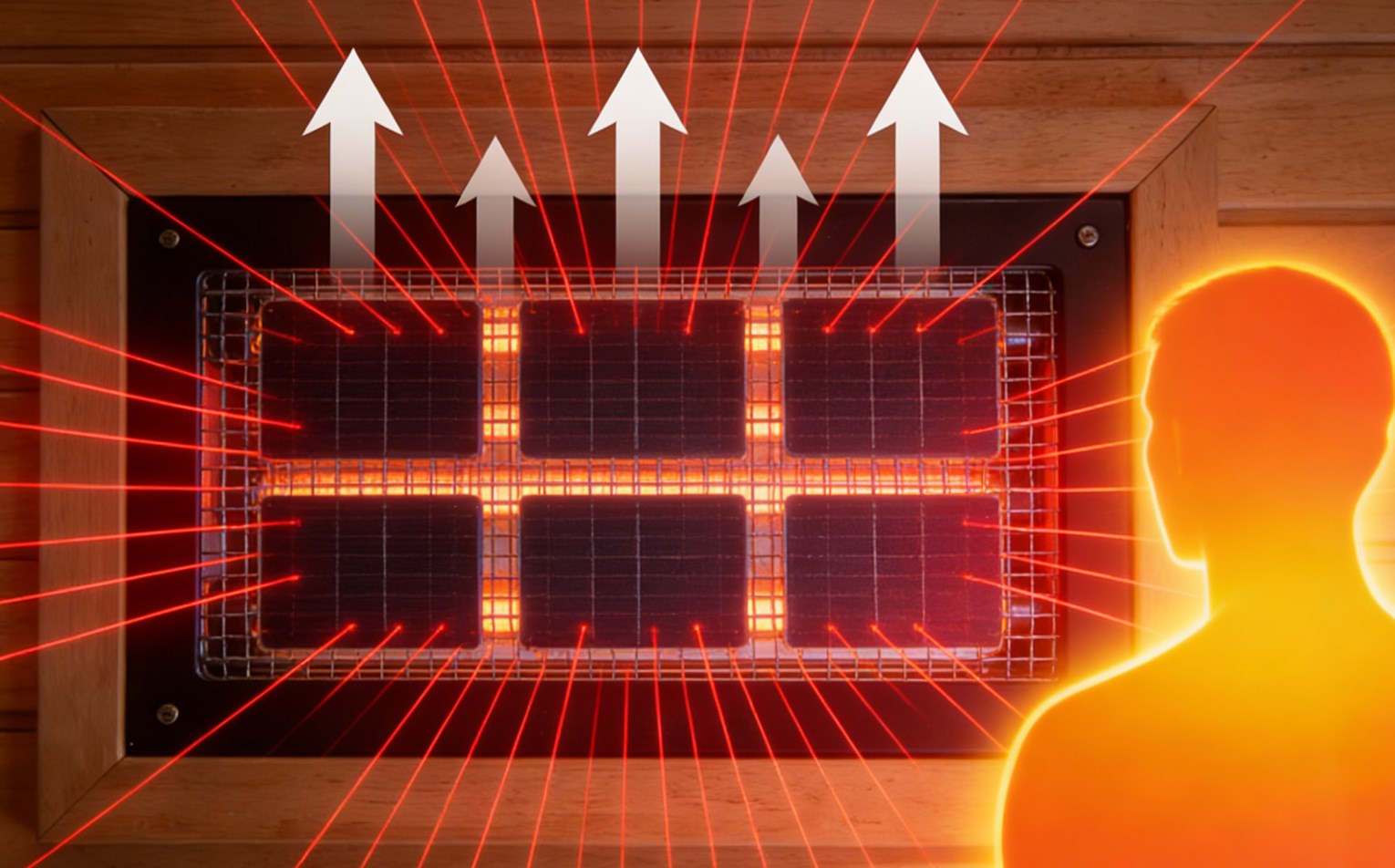
1. Core Principles: Traditional Conduction vs. Modern Radiation – Worlds Apart in Heating Logic
The difference in heating principles is the root cause of all disparities between the two and directly affects subsequent user experience.
Mica Board Heating: A traditional technology based on "indirect conduction heating." Its core structure consists of nickel-chromium alloy heating wires embedded inside mica sheets (a mineral material with high temperature resistance and insulation properties). When energized, the heating wires first generate heat, which is then conducted to the air through the mica sheets. Finally, the entire sauna is heated through air convection. Similar to an "electric heater," this method essentially heats the air to raise the ambient temperature, requiring a certain amount of time for heat to circulate and spread in the space.
Far-Infrared Graphene Heating: An advanced technology relying on "direct radiant heating." When energized, graphene (a two-dimensional material composed of a single layer of carbon atoms) emits far-infrared rays with a wavelength of 4-14μm – a wavelength close to that of the human body's own radiation. These rays can penetrate the air and act directly on the human body, achieving "inside-out heating" – there is no need to heat the air first; instead, human cells absorb energy and warm up, with the air providing auxiliary heating. Similar to "sunlight irradiation," this heating process is more direct and aligns better with the body's physiological sensations.
2. Core Performance Comparison: Obvious Gaps from Heating Speed to Energy Consumption
For sauna users, questions like "How fast does it heat up?" "Is it energy-efficient?" and "Is the heat evenly distributed?" are top concerns – and these exactly reflect the core performance differences between the two.
In terms of heating speed, mica board heating is relatively slow: it usually takes 20-30 minutes to reach the set temperature (60-80℃). Since it must heat the air first, the larger the sauna space, the slower the heating process, and there is often a noticeable temperature difference where "the upper area is hot while the lower area is cool." In contrast, far-infrared graphene heating is significantly faster, reaching the set temperature in just 5-10 minutes. Because heat acts directly on the human body, users can feel warmth even before the ambient temperature fully rises, and there is no obvious temperature difference throughout the space.
When it comes to energy consumption, mica board heating has higher costs. Approximately 30% of the heat it generates is lost through walls and ceilings, as it needs to maintain a high air temperature to achieve the desired sauna experience. Additionally, during the insulation phase, the system requires frequent on-off cycles to replenish heat, leading to higher electricity bills for long-term use. Far-infrared graphene heating, however, is much more energy-efficient: the thermal conversion rate of far-infrared rays exceeds 95%, and heat is directly absorbed by the human body and surrounding objects, with air only playing an auxiliary heating role. This minimizes heat loss, resulting in 20%-40% lower energy consumption than mica board heating for the same usage duration.
Heat uniformity is another key distinction. Mica board heating relies on air convection to distribute heat, which means areas close to the heating wires are hotter, while corners and the bottom of the sauna remain cooler. This often causes users to experience discomfort such as "hot head and cold feet." On the other hand, far-infrared graphene heating emits rays that radiate evenly at 360 degrees. No matter where a user stands or sits in the sauna, their body surface temperature rises uniformly, perfectly meeting the human body's comfort needs of "warm feet while keeping the head cool."
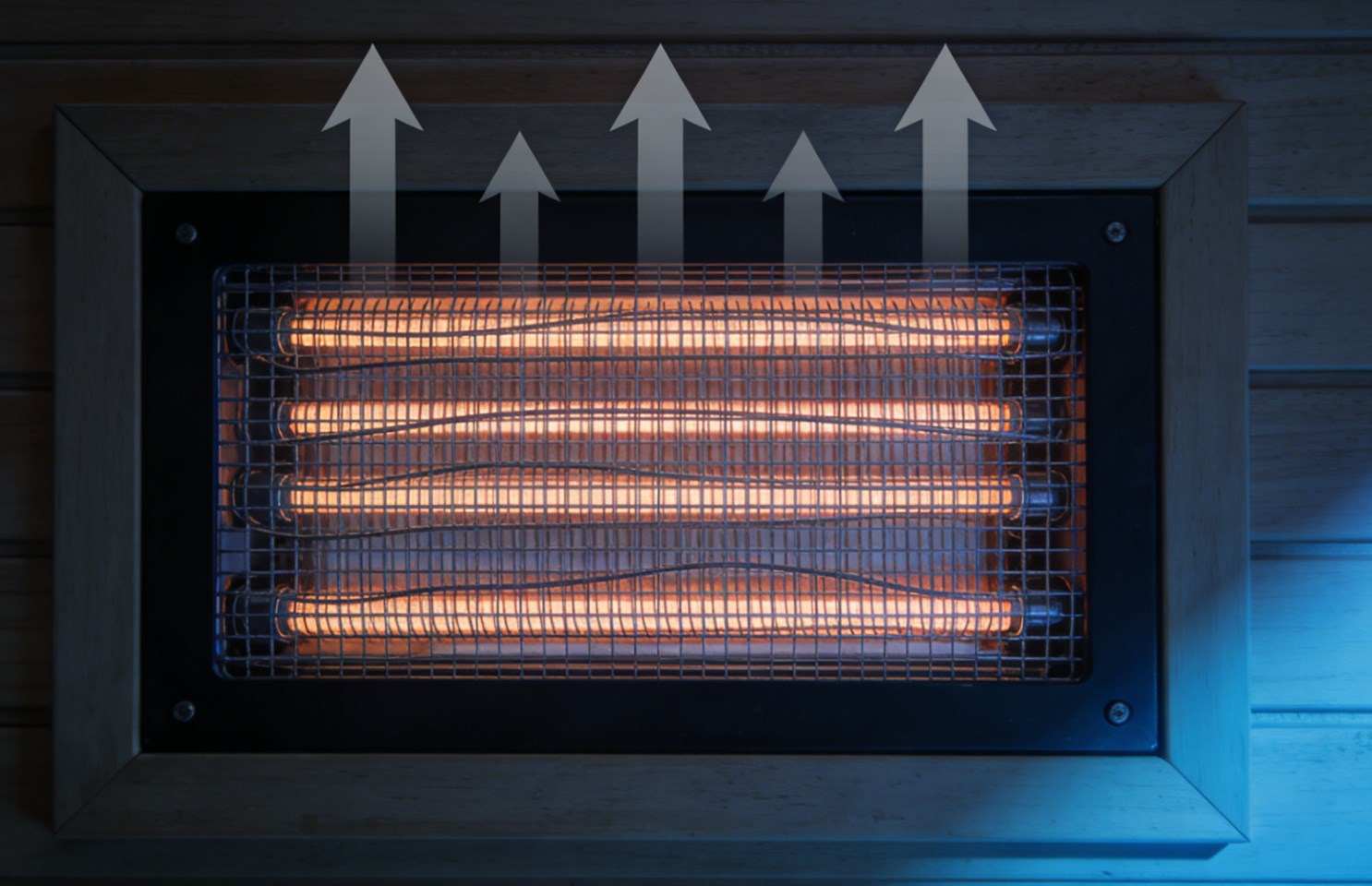
In terms of safety performance, mica board heating is rated as moderate. While mica boards themselves are high-temperature resistant (with a maximum temperature resistance of approximately 600℃), the internal nickel-chromium alloy heating wires are at risk of aging and oxidation over time. Long-term use at high temperatures may lead to "local overheating," and if debris covers the mica board, it can easily pose safety hazards. Furthermore, the heating process dries out the air significantly, which may cause excessive skin moisture loss. Far-infrared graphene heating offers higher safety: the surface temperature of graphene heaters is stable (usually not exceeding 100℃), and there are no exposed heating wires, reducing the risk of local overheating. Additionally, far-infrared rays have a "gentle heating" property that reduces excessive evaporation of air moisture, and graphene itself has antibacterial properties, lowering the risk of mold growth in the sauna.
3. Installation and Maintenance: Convenience Determines Long-Term Usage Costs
Beyond user experience, installation difficulty and long-term maintenance costs are also important factors to consider when making a choice.
Mica Board Heating: Complex installation process. Mica boards need to be cut according to the sauna's size, then fixed to walls or the ceiling with brackets. Separate wiring is required for the heating wires, demanding high technical skills from installers. If the heating wires are damaged later, the entire mica board must be disassembled and replaced – maintenance costs are high (replacement cost for a single mica board is approximately 200-500 yuan), and the repair process may damage the sauna's internal decoration.
Far-Infrared Graphene Heating: More flexible and convenient installation. Graphene heaters mostly adopt "film-type" or "plate-shaped modular" designs, which can be directly pasted on sauna walls, floors, or the bottom of seats. No complex brackets are needed, wiring is simple, and ordinary electricians can complete the installation. Graphene heating elements have a lifespan of 10-15 years (2-3 times that of mica boards), with no easily damaged components. Basically, no maintenance is required in the later stage – only regular cleaning of surface dust is needed.
4. Applicable Scenarios: Different Needs Call for Different Choices
There is no absolute "better option" – only "more suitable" ones. Based on the characteristics of the two, users with different needs should prioritize different choices:
1. Mica Board Heating: Suitable for "Traditional Sauna Enthusiasts + Budget-Conscious Users"
-
More suitable for users pursuing the traditional "high-temperature dry steaming" experience: Mica board heating can achieve a high-temperature environment above 80℃, meeting the needs of users seeking "intense sweating" (e.g., traditional Finnish sauna lovers).
-
Suitable for small fixed saunas: If the sauna area is less than 4㎡ and usage frequency is low (e.g., 1-2 times a month), the slow heating and high energy consumption of mica boards are less noticeable. With a lower initial purchase cost (approximately 300-500 yuan per square meter for heating), it is suitable for budget-conscious users.
2. Far-Infrared Graphene Heating: Suitable for "Efficient & Convenient + Long-Term Use"
-
Suitable for users pursuing "fast heating + energy efficiency": For office workers or families using the sauna daily for short periods (15-20 minutes), the fast heating and low energy consumption of graphene greatly improve usability and reduce long-term costs.
-
Suitable for medium-to-large or customized saunas: For saunas larger than 4㎡, the temperature difference issue of mica boards becomes more prominent, while the uniform radiation of graphene ensures a consistent experience. Additionally, the modular design of graphene can adapt to irregularly shaped saunas (e.g., curved walls, tatami-style seats), offering more flexible installation.
-
Suitable for users focusing on "comfort & health": The "gentle heating" of far-infrared rays reduces skin dryness. With its antibacterial properties, graphene is more suitable for families with the elderly or children, or users with high hygiene requirements for saunas.
5. Conclusion: Clarify 3 Core Questions Before Choosing
After reading the comparison, if you are still hesitant, ask yourself these 3 core questions first:
-
How frequently will you use it? If you use it multiple times a day or week, the energy-saving advantage of graphene will quickly offset its higher initial purchase cost (approximately 600-800 yuan per square meter for heating), making it more cost-effective in the long run. If usage is occasional, mica boards can meet basic needs.
-
Do you prioritize experience or traditional habits? If you pursue "fast heating, uniform warmth, and low dryness," choose graphene. If you are committed to the traditional "high-temperature dry steaming" experience, mica boards are more suitable.
-
What is the size of the sauna? For fixed saunas with an area ≤4㎡, mica boards are an option. For saunas larger than 4㎡ or customized ones, prioritize graphene.
In summary, mica boards are a "traditional choice for meeting basic needs," while far-infrared graphene is an "upgraded option that balances experience, energy efficiency, and safety." With the popularization of technology, graphene heating has become the mainstream configuration for mid-to-high-end saunas. If your budget allows and you pursue a higher-quality user experience, graphene is undoubtedly a more worthwhile long-term investment.