As the core component of sauna equipment, the technological evolution of heating materials directly determines the experience effect, energy consumption level, and application scenario boundaries of saunas. From traditional metal resistance wires to new materials such as graphene and PTC semiconductors, every breakthrough in heating technology has promoted a qualitative leap in the sauna industry—from "extensive heating" to "precision health empowerment," and from commercial-exclusive scenarios to household popularization. The development of heating materials has not only reshaped the industry ecology but also made saunas a rigid demand product in the era of health consumption.
I. Traditional Heating Materials: Laying Industry Foundations with Prominent Growth Bottlenecks
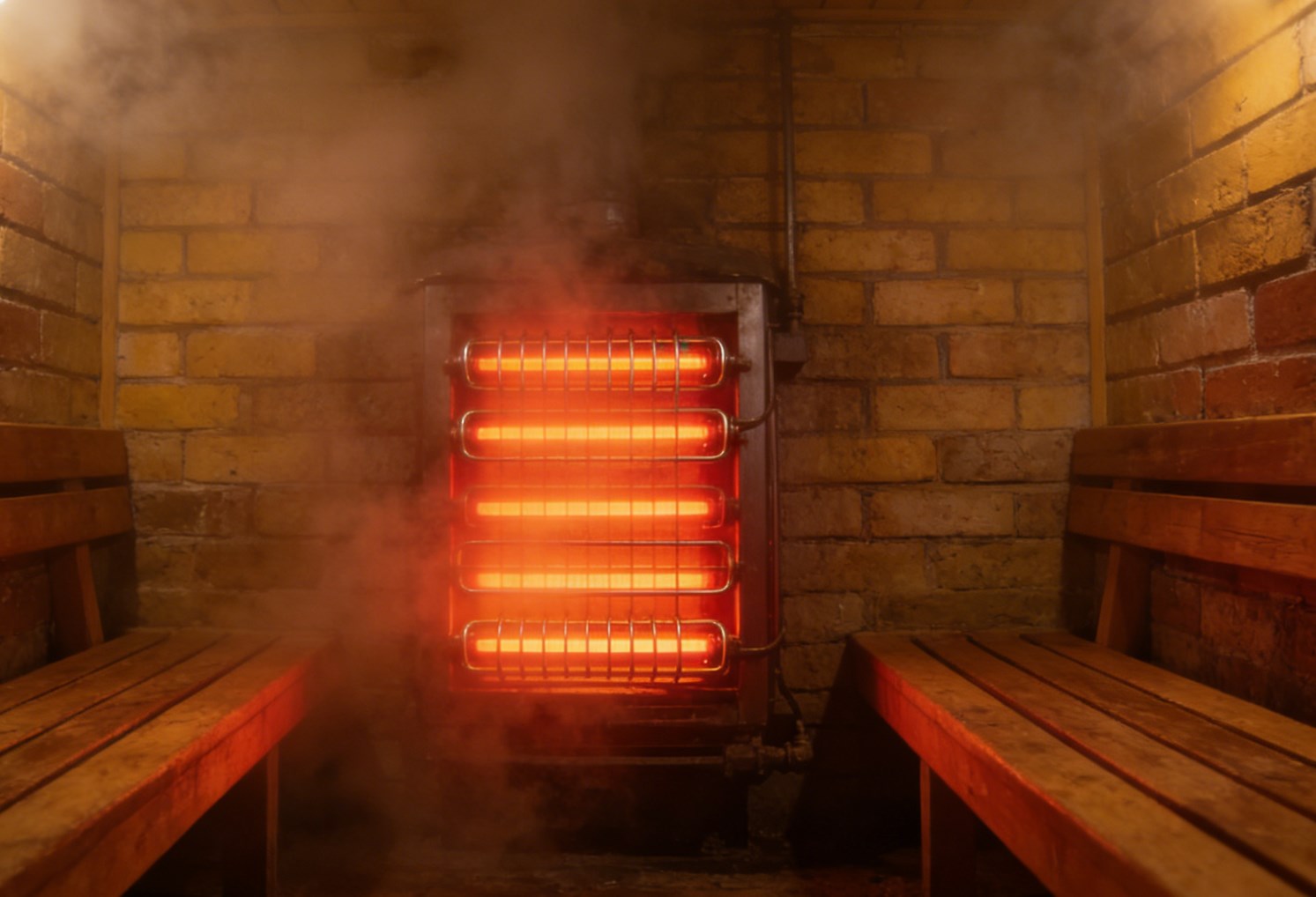
From the late 20th century to the early 21st century, the sauna industry relied on metal resistance wires and quartz tubes as core heating materials, becoming the mainstream choice in the industry's initial stage. These materials achieve heating through the Joule effect of electric current, with mature technology and low cost, laying the foundation for the commercial popularization of saunas.
-
Technical Characteristics: Metal resistance wires are mainly made of nickel-chromium alloy, with a heat conversion efficiency of approximately 63.8%, requiring thick insulation layers to reduce heat loss; quartz tube heating relies on infrared radiation from the tube wall, with a slow heating rate that takes more than 30 minutes to rise from ambient temperature to 60°C.

-
Application Scenarios: Primarily adapted to large commercial saunas, occupying a dominant position in public baths, hotel spas, and other scenarios due to cost advantages, with a market penetration rate exceeding 80% before 2010.
-
Industry Limitations: High energy consumption (0.68 kWh/m² per unit area), failing to meet environmental trends; poor heating uniformity (temperature difference exceeding 5°C in the cabin), prone to local overheating or cold spots; short service life (average replacement cycle of metal resistance wires is only 1-2 years), leading to high maintenance costs.
During this period, the technical limitations of heating materials confined the sauna industry to the primary stage of "simple sweating." Issues such as high energy consumption and uneven experience restricted the expansion of the household market, with industry growth relying mainly on the scale expansion of commercial scenarios.

II. Transitional Heating Materials: Energy Efficiency Upgrade and Diversified Scenario Exploration
In the 2010s, the emergence of carbon fiber and carbon crystal heating materials marked the first technological inflection point in the sauna industry. With superior heat conversion efficiency and radiation characteristics, these materials broke the performance bottlenecks of traditional materials, driving the industry towards energy conservation and lightweight transformation.
Carbon Fiber Heating Materials: Efficient Radiation Leading Commercial Upgrades
Carbon fiber heating wires achieve heating through far-infrared radiation when energized, with wavelengths concentrated in the 5-15 micron range, resonating with the vibration frequency of human cells to achieve "from the inside out" deep heating. Their heat conversion efficiency reaches 82.4%, and unit area energy consumption drops to 0.41 kWh/m², saving 31.2% energy compared to traditional resistance wires.
-
Core Advantages: Significantly improved heating speed (15 minutes on average to reach the set temperature, 50% shorter than quartz tubes); greatly enhanced heat uniformity (temperature difference within ±2°C in the cabin, avoiding local scald risks); extended service life (5-8 years), reducing maintenance costs by 60%.
-
Market Impact: Quickly became the preferred material for mid-to-high-end commercial saunas, driving up industry unit prices. In 2023, its market penetration rate reached 39.5%. Carbon fiber far-infrared saunas launched by leading brands have achieved a 27% higher repurchase rate than traditional equipment, thanks to the advantages of "deep sweating + low energy consumption."
Carbon Crystal Heating Materials: Modular Design Expanding Household Scenarios
Carbon crystal heating panels are made of carbon fiber powder compounded with resin and pressed, featuring modular and thin design (only 0.5-1 cm thick). They can be flexibly embedded in walls or cabinets, enabling the development of household sauna equipment. With a heat conversion efficiency of over 90% and a controllable surface temperature below 50°C, their safety is significantly improved.
-
Technological Breakthroughs: Adopting a planar heating structure for more uniform heat distribution; matching simple temperature control systems to meet household needs; further reducing energy consumption (power of household models controlled at 1.2-1.8 kW, complying with residential electricity load standards).
-
Market Transformation: Promoted the transformation of household sauna equipment from "large cabinets" to "miniaturized and embedded" models. Since 2015, the market size of household saunas has grown at an annual rate exceeding 20%, laying the foundation for the subsequent industry boom. Carbon crystal sauna heating systems launched by enterprises such as Shanxi Dongxiang have become popular choices for both hotel and household scenarios.
-
III. New-Generation Heating Materials: Technology Integration Defining Intelligent Health Paradigms
In recent years, the commercial application of cutting-edge materials such as graphene, PTC semiconductors, and carbon nanotubes, combined with the Internet of Things (IoT) and AI technologies, has brought the sauna industry into an integrated development stage of "materials + intelligence." Heating materials are no longer limited to the "heating" function but have become the core carrier of health monitoring and precision conditioning.
Graphene Heating Materials: Ultimate Energy Conservation Empowering High-End Markets
Graphene heating films, leveraging the unique advantages of a single-layer carbon atom structure, achieve a heat conversion efficiency of up to 95% (15% higher than carbon fiber) and a unit area energy consumption as low as 0.29 kWh/m². With fast heating response (heating up in 3 seconds after power-on and reaching the set temperature in 8-10 minutes) and no electromagnetic radiation, they comply with the EN 62233:2008 safety standard.
-
Technological Innovations: Can be made into flexible films to adapt to various special-shaped structures, promoting the development of sauna equipment towards "customization and lightweight"; wall-mounted dry saunas, portable sauna blankets, and other innovative products have emerged. They emit 6-14 micron far-infrared rays that penetrate 15 cm under the skin to activate cell metabolism, offering auxiliary conditioning effects for sub-health.
-
Market Performance: Has become the core driver of the high-end market, with a market share of 8% in 2023 and an expected increase to 25% by 2030. Nanocarbon ink heating panels jointly developed by Sunlight and the Chinese Academy of Sciences have obtained medical device certification, and their unit price is 30-50% higher than ordinary products yet still in short supply.
PTC Semiconductor Heating Materials: Safe and Controllable Seizing Household Rigid Demand Markets
PTC (Positive Temperature Coefficient) semiconductor materials feature "self-limiting temperature" characteristics—when reaching the set temperature, their resistance automatically increases and current naturally decays, essentially avoiding overheating risks. The probability of overheating failures has decreased by 76% compared to traditional materials. Their power fluctuation range is controlled within ±3.2%, and standby power consumption is as low as 8W, suitable for long-term household use.
-
Scenario Adaptation: Modular design supports quick installation without complex modifications, perfectly fitting the needs of small households. Equipped with intelligent temperature control algorithms, it can dynamically adjust power according to ambient temperature and operate stably in low-temperature environments in northern China. Enterprises such as Shanxi Hengtong use it in intelligent temperature-controlled pool heating systems.
-
Market Growth: With a market penetration rate of 6.7% in 2023, it ranks first among all heating materials in growth rate, driving the annual growth of e-commerce sales of household sauna equipment by 45% and becoming the preferred choice of young consumer groups.
Carbon Nanotube and Heat Pump Integrated Materials: Low-Carbon Innovation Pioneering Future Tracks
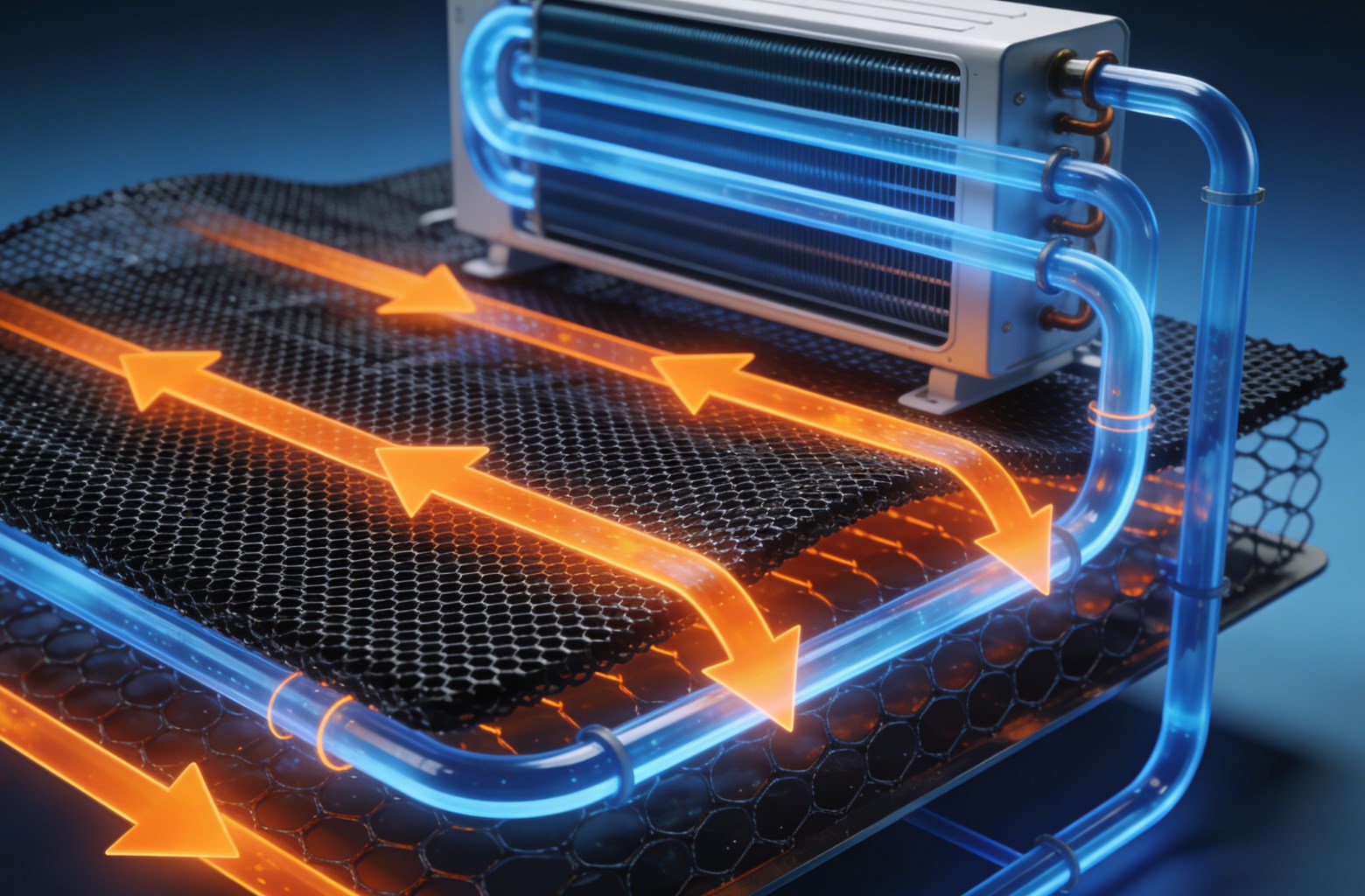
As an emerging technology, carbon nanotube heating materials have a 10% higher thermal efficiency than carbon fiber, with resistance to high and low temperatures and corrosion, and a service life of over 10 years. Heat pump-driven heating technology extracts heat from the air through refrigerant circulation, with a COP (Coefficient of Performance) of 2.8-3.5—consuming 1 kWh of electricity to generate heat equivalent to 3 kWh, saving 52% energy compared to resistance heating.
-
Technical Value: The integration of carbon nanotubes and heat pump technology enables sauna equipment to achieve dual advantages of "ultra-low energy consumption + long service life," aligning with the "dual carbon" policy orientation. Haier's experimental heat pump dry sauna cabin only requires 0.29 kWh/m² to heat from 25°C to 60°C, providing a new path for the industry's low-carbon transformation.
-
Application Prospects: Although currently in the initial stage of commercialization (0.8% penetration rate in 2023), it has become a key R&D focus for leading enterprises. It is expected that its penetration rate in commercial scenarios will exceed 15% by 2030, especially suitable for high-end hotels, health care institutions, and other energy-sensitive scenarios.
-
IV. Industry Transformation and Future Trends Driven by Heating Materials
The iteration of heating materials is not only an improvement in technical parameters but also triggers an overall transformation of the sauna industry chain, presenting new characteristics in product form, application scenarios, and business models.
Core Manifestations of Industry Transformation
-
Diversified Scenarios: From commercial-dominated to "commercial + household" dual-driver development. The proportion of the household market scale has increased from 12% in 2010 to 37% in 2023, with mini dry saunas, embedded saunas, and other products becoming new home favorites.
-
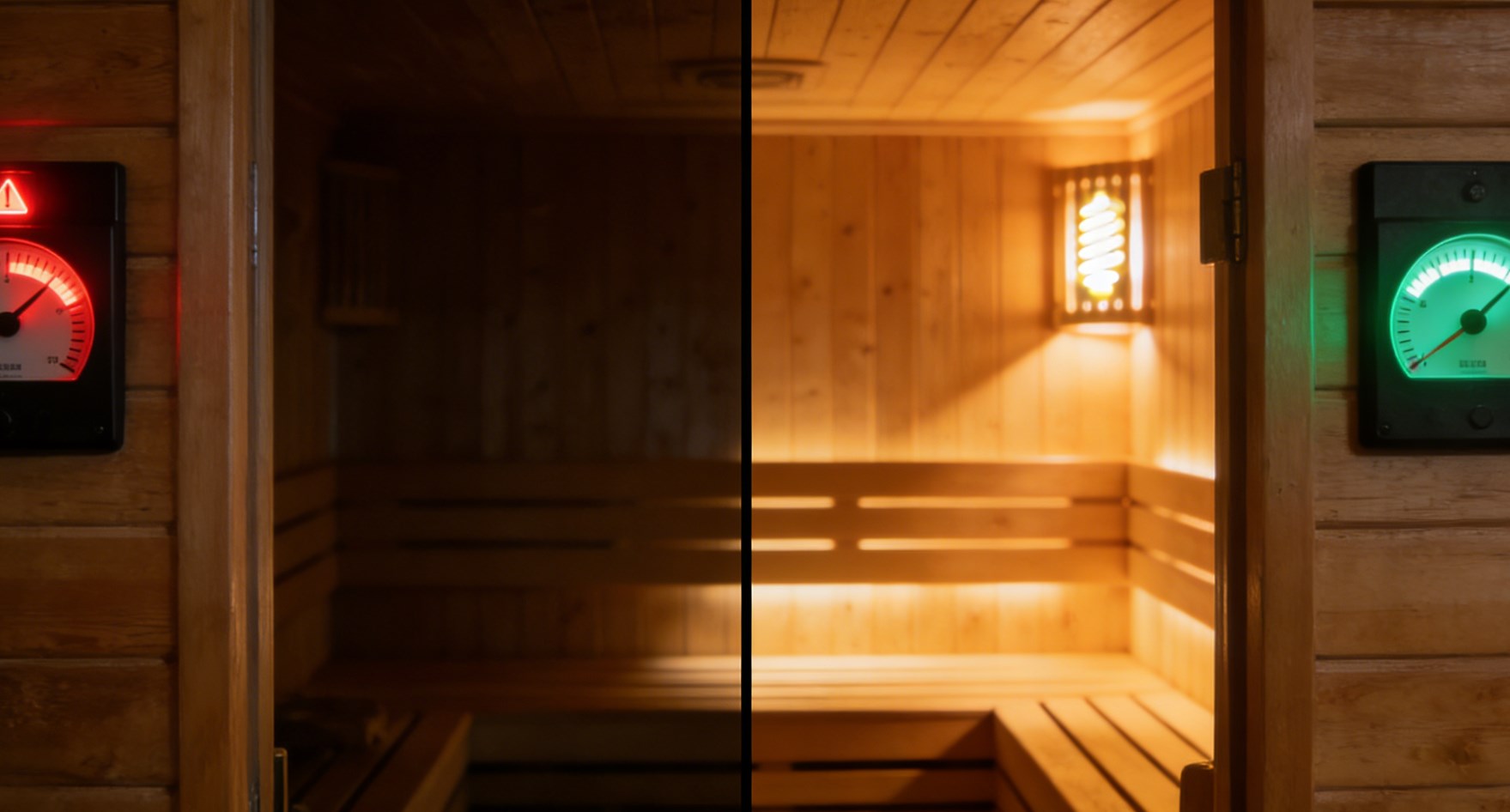
Health-Oriented Experience: The integration of far-infrared radiation functions of heating materials with health management. 72% of consumers are willing to pay a premium for "health monitoring + precision temperature control" functions, and products with sub-health conditioning and chronic disease auxiliary improvement capabilities have a valuation premium of 40%-60%.
-
Efficient Operations: New heating materials have reduced equipment energy consumption and maintenance costs. The annual operating cost of commercial saunas has decreased by 20-30%. Taiyuan Changjiang Bathhouse saved 32,000 yuan annually after adopting an electromagnetic induction heating system.
-
Three Future Development Trends
-
Material Compositeization: Single materials evolve towards "heating + sensing + antibacterial" composite functions. Heating panels will integrate temperature, humidity, and human biosensors to achieve a closed loop of "perception-analysis-regulation." For example, the integration of negative ion functional wood-based panels with heating materials can generate more than 30,000 negative ions per cm³.
-
Extreme Energy Efficiency: Driven by policies, the average heat conversion efficiency of the industry will exceed 92% by 2030. International standards such as the EU ErP Directive will accelerate the elimination of low-energy-efficiency materials, and technologies such as heat pumps and solar-assisted heating will be widely applied.
-
Scenario Customization: Develop specialized heating solutions for different groups' needs—such as "low-temperature slow steaming" carbon crystal heating systems designed for the elderly, "rapid heating" graphene equipment for sports enthusiasts, and medical-grade sauna equipment will become new growth points.
The development history of heating materials is essentially the transformation process of the sauna industry from "function satisfaction" to "value creation." From traditional resistance wires to graphene and heat pump integration technologies, every material innovation has promoted the industry to break through bottlenecks and expand boundaries. In the future, with the in-depth integration of materials science and intelligent technology, sauna equipment will completely bid farewell to the label of "simple heating" and become a household health management terminal integrating health monitoring, precision conditioning, and intelligent control. The industry will also usher in a new growth cycle with a 100-billion-yuan scale.